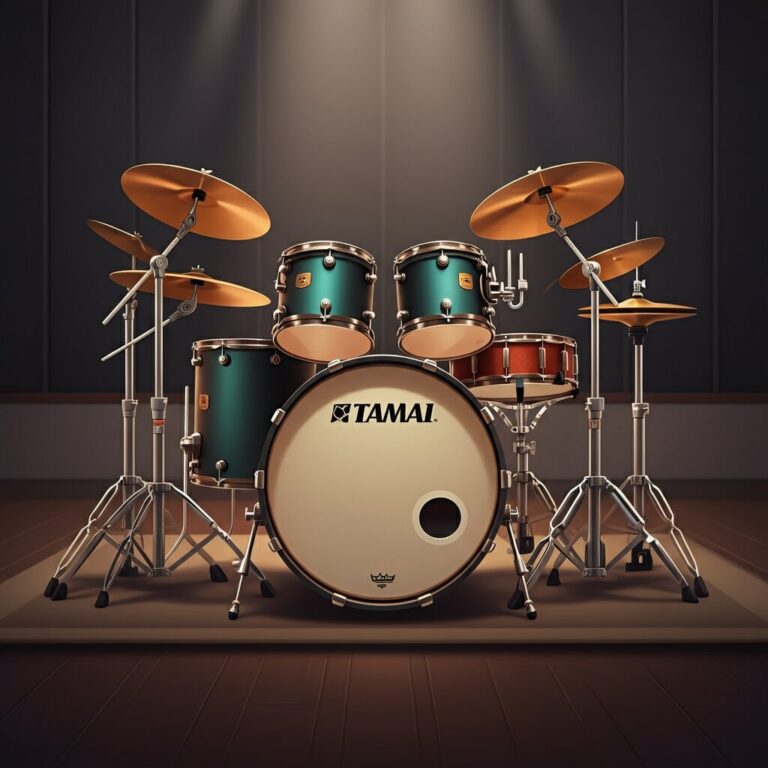
The bass drum sits at the heart of every rhythm section, delivering that unmistakable low-end thump that makes listeners move.
Whether you’re laying down a groove in rock, adding punch to a jazz ensemble, or anchoring an orchestral piece, your bass drum choice can make or break your sound.
Contents
- 1 Understanding Bass Drum Types
- 2 Bass Drum Sizes and Their Applications
- 3 Shell Materials: The Foundation of Your Sound
- 4 Hardware Considerations
- 5 Drumheads: Shaping Your Sound
- 6 Leading Bass Drum Brands and Models
- 7 Double Bass Drum Considerations
- 8 Acoustic Environment and Room Size
- 9 Budget Considerations Across All Price Ranges
- 10 Maintenance and Tuning Tips
- 11 Making Your Final Decision
- 12 Your Foundation Awaits
Understanding Bass Drum Types
Orchestral Bass Drums
Orchestral bass drums, also known as concert bass drums or gran cassa, represent the traditional approach to low-end percussion.
These instruments typically feature:
- Large diameter: Usually 32-40 inches
- Substantial depth: 16-20 inches deep
- Double-headed design: Struck heads on both sides
- Suspended mounting: Often hung in a frame
These drums excel at producing sustained, resonant tones perfect for classical music, where they provide dramatic accents and rolling crescendos.
Kick Drums
The kick drum is the bass drum’s rock and pop incarnation, designed specifically for drum kit applications. Key characteristics include:
- Compact size: Typically 18-26 inches in diameter
- Pedal operation: Played with a bass drum pedal
- Ported options: Many feature resonant head ports
- Internal dampening: Often include built-in muffling systems
This type dominates popular music, from the tight punch of jazz to the thunderous power of metal.
Pitched Bass Drums
Marching bands and drum corps utilize pitched bass drums that can be tuned to specific notes:
- Graduated sizes: Multiple drums in different pitches
- Carrier-mounted: Designed for marching performance
- Ensemble playing: Work together as a “bass line”
- Weather resistant: Built for outdoor performance
Bass Drum Sizes and Their Applications
| Size | Diameter | Depth | Best For | Sound Character |
| 18″ | 18″ | 14-16″ | Jazz, small venues | Quick response, tight tone |
| 20″ | 20″ | 14-17″ | Studio work, versatile use | Balanced punch and depth |
| 22″ | 22″ | 16-18″ | Rock, pop, general use | Industry standard, well-rounded |
| 24″ | 24″ | 16-18″ | Rock, metal, large venues | Deep, powerful projection |
| 26″ | 26″ | 14-18″ | Metal, extreme genres | Maximum low-end impact |
Size Selection by Genre
Jazz and Fusion: Smaller drums (18-20″) provide the quick response needed for intricate rhythms and allow other instruments space in the mix.
Rock and Pop: The 22″ bass drum has become the gold standard, offering enough power for driving rhythms while maintaining clarity.
Metal and Hard Rock: Larger drums (24-26″) deliver the massive low-end required for aggressive styles and can cut through dense arrangements.
Studio Recording: Many producers prefer 20-22″ drums for their balanced sound that sits well in a mix without overwhelming other instruments.
Shell Materials: The Foundation of Your Sound
The shell material significantly impacts your bass drum’s tonal character, attack, and resonance.
Maple Shells
Maple represents the most popular choice among drummers for good reason:
- Balanced frequency response: Even across the entire spectrum
- Warm, musical tone: Natural resonance without harshness
- Versatile application: Works across multiple genres
- Excellent sustain: Natural ring that can be controlled with dampening
Best for: All-around use, studio recording, genres requiring balanced tone
Birch Shells
Birch shells offer brightness and clarity that cuts through dense mixes:
- Enhanced attack: Sharp, defined initial strike
- Bright character: Emphasized high-mid frequencies
- Excellent projection: Carries well in live situations
- Clear definition: Each note remains distinct
Best for: Live performance, rock music, situations requiring clarity
Mahogany Shells
Mahogany provides vintage warmth reminiscent of classic recordings:
- Warm resonance: Rich, woody tone quality
- Reduced high-end: Naturally mellowed brightness
- Classic sound: Evokes vintage drum recordings
- Musical sustain: Pleasing natural decay
Best for: Classic rock, jazz, vintage-style recordings
Acrylic Shells
Made famous by John Bonham’s Ludwig Vistalite, acrylic offers unique characteristics:
- Enhanced attack: Sharp, cutting initial transient
- Visual appeal: Clear or colored transparent shells
- Powerful projection: Cuts through loud band mixes
- Unique resonance: Distinctive tonal character
Best for: Rock, metal, situations requiring maximum impact
Exotic Woods
Premium options like bubinga offer specialized tonal qualities:
- Complex overtones: Rich harmonic content
- Enhanced low-end: Natural bass response
- Unique character: Distinctive from standard materials
- Premium construction: Often found in high-end drums
Hardware Considerations
Quality hardware ensures your bass drum performs reliably and sounds its best.
Lugs and Tension Rods
- Low-mass lugs: Reduce shell interference for better resonance
- High-quality tension rods: Maintain tuning stability
- Proper placement: Even spacing prevents shell stress
Hoops
- Die-cast hoops: Provide more aggressive attack and tuning stability
- Triple-flanged hoops: Offer warmer tone and easier head changes
- Wood hoops: Add warmth and vintage character
Internal Hardware
- Isolation mounts: Prevent hardware vibration from affecting shell resonance
- Quality springs: Ensure smooth, reliable pedal operation
- Reinforcement hoops: Add structural integrity to larger shells
Drumheads: Shaping Your Sound
The drumhead selection dramatically affects your bass drum’s character.
Batter Heads (Striking Side)
- Single-ply heads: Maximum resonance and sustain
- Double-ply heads: Enhanced durability and focused attack
- Textured surfaces: Reduce overtones and add punch
- Built-in dampening: Control resonance without external muffling
Resonant Heads (Front Side)
- Full heads: Maximum resonance and sustain
- Ported heads: Allow microphone placement and reduce resonance
- Different tensions: Affect pitch relationships between heads
Leading Bass Drum Brands and Models
DW (Drum Workshop)
DW Performance Series Bass Drum
- Maple shell construction provides balanced, musical tone
- Available in multiple sizes and finishes
- True-Pitch tuning system ensures consistent sound
- Perfect for studio and live applications
Yamaha
Live Custom Bass Drum
- Birch shell delivers enhanced attack and projection
- Optimized for live performance situations
- Excellent build quality and reliability
- Multiple size options available
Ludwig
Vistalite Bass Drum
- Iconic acrylic construction made famous by John Bonham
- Powerful, cutting sound perfect for rock music
- Available in various transparent colors
- Classic vintage aesthetic with modern reliability
Farmer Footdrums
StompDrum Series
- Compact, portable design for easy transport
- Maple shell with custom hardware
- Aquarian drumheads for defined low-end
- Perfect for smaller venues and traveling musicians
Double Bass Drum Considerations
Double bass drum setups have become essential in metal and progressive music genres.
Benefits of Double Bass
- Enhanced speed: Faster passages become achievable
- Complex patterns: Intricate rhythmic possibilities
- Visual impact: Impressive stage presence
- Genre requirements: Essential for certain metal styles
Setup Considerations
- Matching drums: Identical shells ensure tonal consistency
- Pedal systems: Double pedals vs. two separate pedals
- Physical demands: Increased stamina requirements
- Space requirements: Larger kit footprint
Acoustic Environment and Room Size
Your playing environment significantly affects bass drum performance.
Small Rooms
- Smaller drums (18-20″) prevent overwhelming the space
- Controlled resonance helps manage room acoustics
- Dampening may be necessary to prevent muddiness
Large Venues
- Larger drums (22-26″) provide necessary projection
- Enhanced power carries sound to back of room
- Less dampening allows natural resonance to fill space
Recording Studios
- Versatile sizes (20-22″) work well for most genres
- Quality construction captures well on microphones
- Tuning flexibility allows adaptation to different songs
Budget Considerations Across All Price Ranges
Entry Level ($300-800)
Recommended Options:
- Pearl Export Series
- Tama Imperialstar
- Ludwig Accent Series
Features: Basic construction, functional hardware, suitable for learning
Mid-Range ($800-2000)
Recommended Options:
- DW Performance Series
- Yamaha Stage Custom
- Ludwig Classic Maple
Features: Professional construction, quality hardware, versatile sound
Professional ($2000+)
Recommended Options:
- DW Collector’s Series
- Ludwig Legacy
- Yamaha Phoenix
Features: Premium materials, exceptional craftsmanship, touring-grade reliability
Maintenance and Tuning Tips
Proper maintenance ensures your bass drum continues performing at its best.
Regular Maintenance
- Head replacement: Change heads when they show wear or lose tone
- Hardware inspection: Check lugs and tension rods regularly
- Shell cleaning: Keep the interior and exterior clean
- Storage considerations: Protect from temperature and humidity changes
Tuning Techniques
- Even tensioning: Tune lugs in opposite pairs for consistent pitch
- Pitch relationships: Consider the interval between batter and resonant heads
- Dampening control: Use internal dampening thoughtfully to shape tone
- Room acoustics: Adjust tuning based on your playing environment
Making Your Final Decision
Choosing the right bass drum involves balancing several factors specific to your situation.
Assessment Questions
- What genres do you primarily play?
- What size venues do you typically perform in?
- Do you prioritize portability or maximum sound?
- What’s your budget range?
- Do you need versatility or specialized sound?
Testing Recommendations
- Play before buying: Nothing replaces hands-on experience
- Test in different settings: Try drums in various acoustic environments
- Consider your complete kit: Ensure the bass drum complements your other drums
- Think long-term: Choose a drum that can grow with your playing
Your Foundation Awaits
Ready to find your perfect bass drum? Share this guide with friends who might be on their own quest for the ultimate low-end foundation.